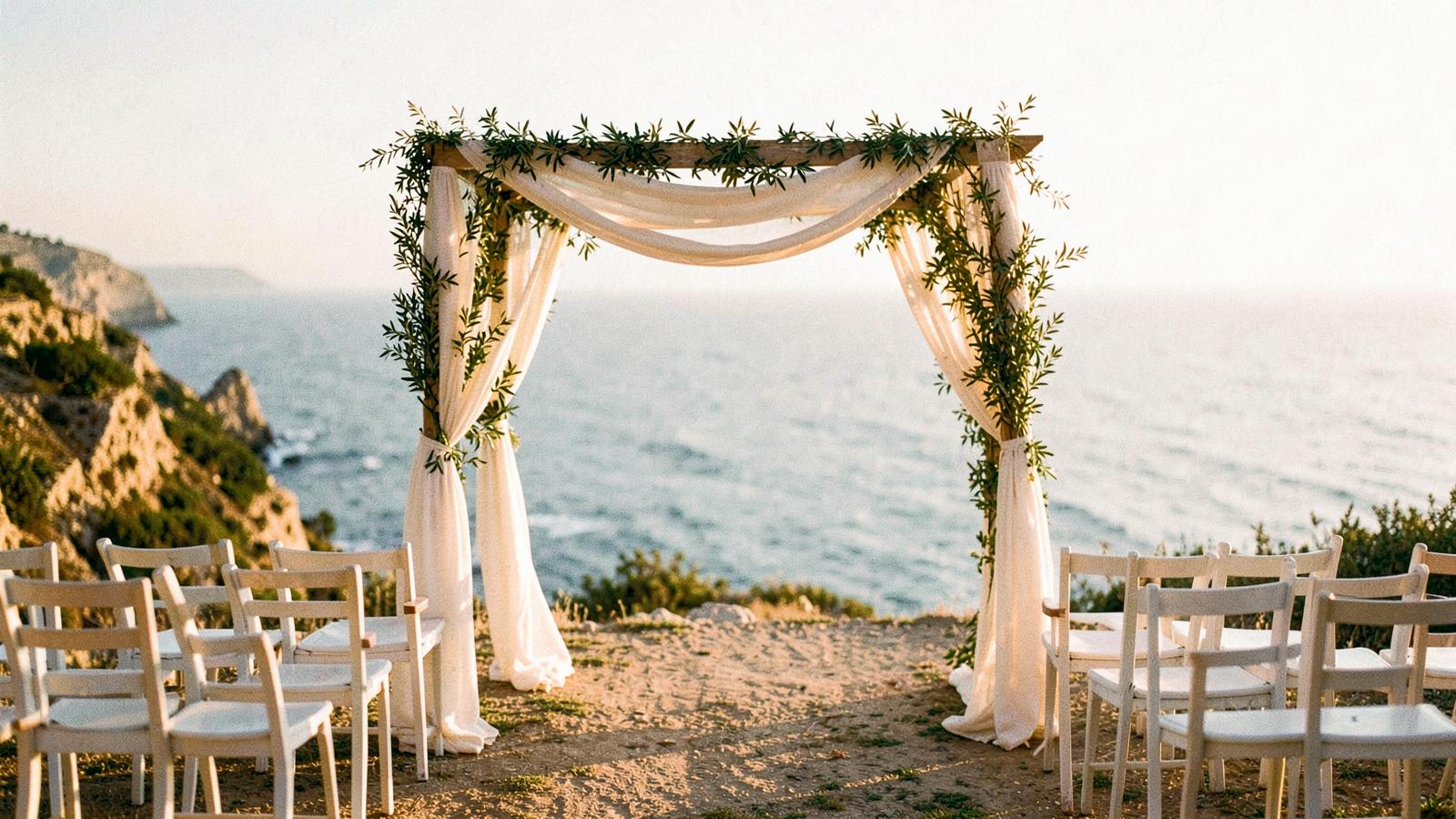
Tips for planning a destination wedding
A destination wedding is two projects at once: a wedding and a group trip. The couples who enjoy theirs decide the legal path, the guest cost, and the on-the-ground contact early — and let a local planner and a travel agent carry the rest.
Choosing the location
Travel time from your guest list
Map where your must-invite guests actually live. One connection is the difference between a 65% and a 40% acceptance rate. If most of your list is in one region, pick a destination with a direct flight from its main airport.
Season and weather risk
Check hurricane, monsoon, and heat windows for the exact month. Shoulder season usually gets you better pricing and survivable temperatures — high season gets you crowds and peak resort rates.
Marriage legality
Some countries require residency periods, blood tests, translated documents, or civil ceremonies weeks ahead. Many couples handle the legal marriage at home and hold a symbolic ceremony at the destination.
Vendor availability
Small islands and remote towns have a handful of photographers and florists who book 12–18 months out. Confirm who is available before you fall in love with a date.
Total cost to attend
Add flights, three to four nights of lodging, ground transport, and meals. If that number is over what a typical guest on your list can absorb, expect regrets — and plan the guest count accordingly.
Get the legal part right first
Marriage requirements abroad vary widely — residency periods of anywhere from 24 hours to 40 days, translated and apostilled birth certificates, civil ceremonies at a registry office, and witnesses who must be local residents. Check the requirements with the country's embassy or consulate before you put down a venue deposit, not after.
The simplest and most common path: sign the legal paperwork at your county courthouse at home, then hold a symbolic ceremony at the destination with an officiant of your choosing. Nothing about the day changes for your guests, and you skip the paperwork risk entirely.
What a destination wedding actually costs
Smaller guest counts and all-inclusive packages often make the wedding itself cheaper than a hometown one. These are the lines that catch people out.
| Line item | What to expect |
|---|---|
| Your travel and lodging | Usually longer than guests' — plan 5–7 nights for setup, welcome events, and recovery. |
| Vendor travel fees | If you bring a photographer or planner from home: flights, lodging, meals, and often a travel day rate. |
| Welcome event | Nearly expected at a destination wedding. Budget for a welcome dinner or cocktail hour on arrival night. |
| Farewell brunch | Cheaper than the welcome event and the one most couples forget to price. |
| Guest transport | Airport shuttles and venue transfers. Often the single kindest line item you can pay for. |
| Shipping and duty | Decor, signage, and favors shipped ahead can incur customs fees. Sourcing locally is usually cheaper. |
| Marriage paperwork | Document translation, apostilles, officiant fees, and civil registration costs. |
| Wedding insurance | Cancellation and weather coverage matters far more when travel and deposits are non-refundable. |
Track these against your overall allocation using the wedding budget breakdown — the percentages still hold, but travel becomes its own category rather than an afterthought.
A 12-month destination timeline
12+ months out
Set the budget and rough guest count. Choose the region and the season. Research marriage requirements. Start talking to a travel agent about room blocks and group rates.
10–12 months
Book the venue or resort and lock the date. Hire a local planner or on-site coordinator. Send save-the-dates — earlier than a hometown wedding, because guests are booking travel.
8–10 months
Book photographer, officiant, and any vendors you're flying in. Set up a wedding website with travel, lodging, and airport details.
6–8 months
Confirm the room block and any group flight deals. Plan the welcome event and farewell brunch. Order attire — international alterations are a headache.
4–6 months
Start the legal paperwork: passports current, documents translated, residency requirements scheduled. Book guest transport.
2–3 months
Send invitations with RSVP well ahead of airline change fees. Finalize menus and rentals with your local planner. Assemble welcome bags.
1 month
Confirm every vendor in writing with times and contacts. Share the run of show. Reconfirm shuttles and check the weather backup plan.
Travel week
Carry attire and documents in your hand luggage. Arrive at least three days early for the marriage license, tasting, and a walkthrough.
Guest list and etiquette
- You are not obligated to pay for guest travel or lodging — but you are obligated to be clear and early about costs.
- Send save-the-dates 9–12 months ahead so guests can book flights and use vacation days.
- Negotiate a room block at two price points so guests can choose their budget.
- Expect a smaller yes list. A realistic destination acceptance rate is 40–60%, not the 80% of a hometown wedding.
- Pay for the welcome event, guest transport between hotel and venue, and anything you're requiring guests to attend.
- Consider a hometown reception later for the people who can't travel — it's cheaper and it prevents hurt feelings.
- Don't fill the weekend. Guests paid for a trip; leave them two open blocks to enjoy it.
For the invite-order mechanics — A/B lists, plus-ones, and children — see the wedding guest list guide.
Local vendors vs. bringing your own
Hire locally by default. Local vendors know the permits, the light, the customs process, and the backup venue when it rains. Bring someone from home only when their work is genuinely irreplaceable to you — usually the photographer — and budget their flights, lodging, meals, and a travel day rate on top of their fee.
Either way, you want one on-site coordinator who is present the week of. A resort "wedding coordinator" is often a sales role that hands off; ask directly who will be standing in the room. The planner vs. coordinator guide covers the difference in scope.
Questions to ask before you sign
- Are you licensed and insured to work at this venue, and have you worked there before?
- What is included when a resort says "wedding package" — and what is charged separately?
- Who is my on-site contact the week of, and what is their phone number and WhatsApp?
- What is the weather backup plan, when is it called, and does it cost extra?
- What is the deposit and cancellation policy if travel restrictions or a storm change the date?
- Is the contract in my language, in my currency, and what exchange rate applies?
- For vendors I fly in: what travel, lodging, and day-rate costs do I owe on top of the package?
Mistakes that cost the most
- Booking a resort package before checking marriage legality — then discovering a 30-day residency requirement.
- Assuming your home photographer can just come. Some countries require work permits.
- Skipping the site visit. A video call with the coordinator plus recent real-wedding photos is the minimum.
- Shipping decor internationally instead of sourcing it locally, and paying more in duty than the decor cost.
- Not buying wedding insurance when every deposit is non-refundable and abroad.
- Planning three days of mandatory events. Guests who paid for flights need free time.
- Wiring a deposit with no written contract. Use a card or an escrow-style payment you can dispute.
Build your travel team
A travel agent who specializes in weddings handles room blocks, group flight rates, and the twenty emails per guest that would otherwise be yours. Search the Lumière vendor directory to find travel advisors, planners, and photographers who work in your area — and if you're a travel pro, you can claim your own listing there.
Frequently asked questions
How much does a destination wedding cost?
Most couples spend less on the wedding itself — smaller guest counts and all-inclusive packages bring the total down — but more on their own travel, the welcome event, and vendor travel fees. Budget the same per-guest figure you'd use at home, then add flights and 5–7 nights of lodging for yourselves plus any vendors you bring.
How far in advance should you plan a destination wedding?
12 to 18 months. Save-the-dates should go out 9–12 months ahead so guests can book flights and request time off, and popular resort dates and local vendors fill 12+ months out.
Do you pay for guests' travel at a destination wedding?
No. Guests pay for their own flights and lodging. You're expected to cover the wedding, the welcome event, and ground transport between the hotel and venue, and to communicate costs early enough that guests can decide honestly.
Is a destination wedding legally binding?
It depends on the country. Many have residency periods, document translation, or civil-ceremony requirements. A common approach is a small legal ceremony at home before or after, with a symbolic ceremony at the destination.
Should I hire a local planner or bring one from home?
Hire local, or hire a home planner who has produced weddings in that country. Local knowledge of vendors, permits, customs, and weather is worth more than familiarity with you — and it's usually cheaper than flying someone in.
How many guests actually come to a destination wedding?
Plan for 40–60% of invitees. Cost, distance, and time off drive declines. Invite with that rate in mind rather than trimming the list to the number you want in the room.